























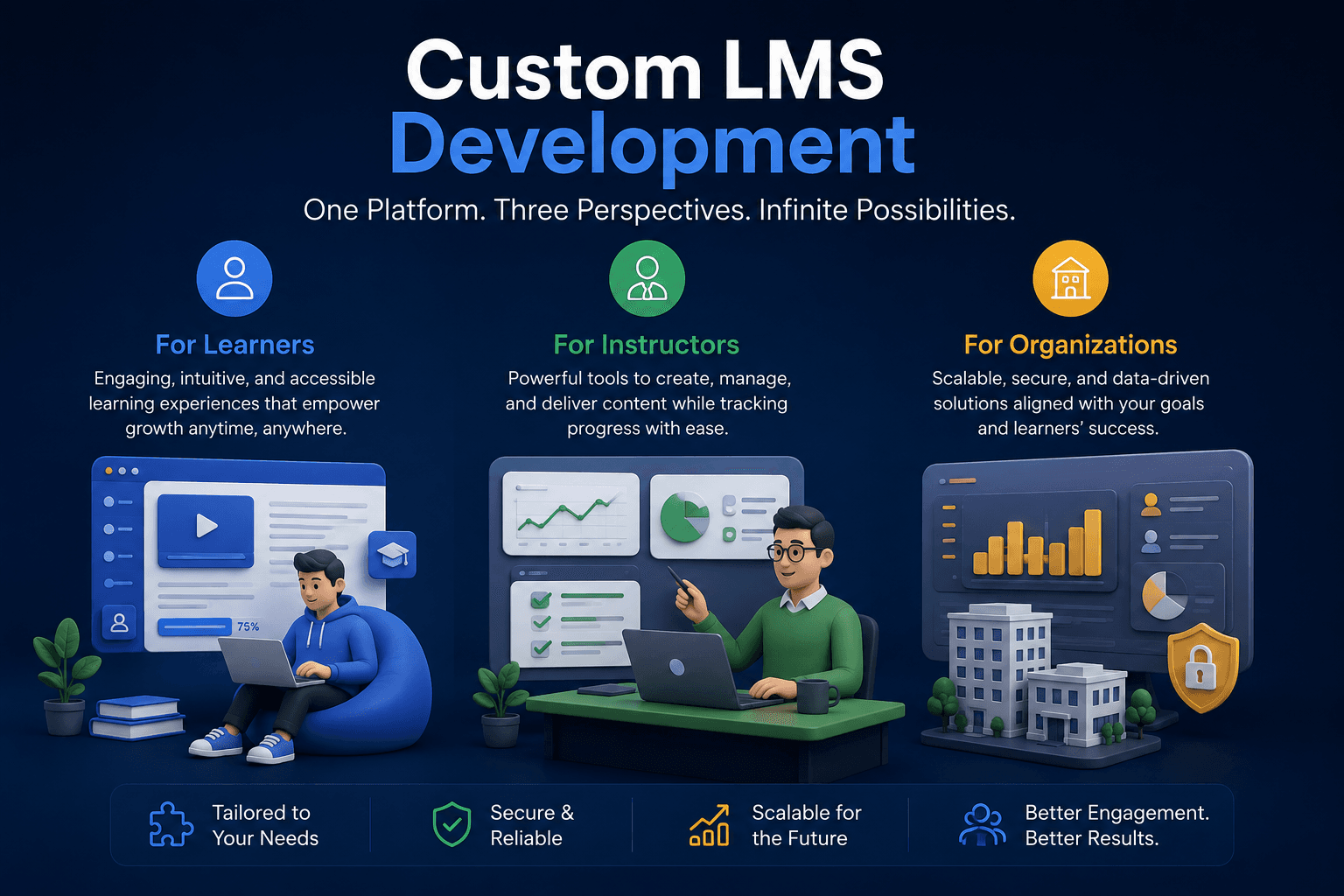
Three people usually sit in the room when a healthcare organization decides to build a learning management system: someone running training, someone running IT, and someone running compliance. Each of them is evaluating the project against a completely different set of criteria, and a lot of custom LMS development projects run into trouble because only one of those perspectives got heard clearly during planning.
The Training Manager's View
The training manager cares about one thing above all else: will staff actually complete their training, or will completion rates quietly stay low no matter how good the content is. A learning management system that requires five logins and a confusing menu structure gets the same result as no training system at all, just with extra reminder emails.
What matters most from this seat: course assignment that maps to actual roles and departments, so a new hire automatically gets the right onboarding path instead of someone manually assigning modules. Progress tracking that's actually visible, not buried three menus deep. And certification tracking that flags expirations before they become a compliance problem, not after.
Woltrio builds custom LMS solutions around this reality by starting with the actual training workflow, not a generic course catalog structure. Learning content and clinical relevance often overlap directly with our AI and automation services, where automated reminders and completion nudges reduce the manual chasing training managers usually end up doing themselves.
The IT Director's View
The IT director cares less about course content and more about whether this new system becomes another maintenance burden or actually reduces one. The questions from this seat are different: does the LMS integrate with existing HR systems so staff records don't have to be duplicated? Does it authenticate through the organization's existing identity provider, or does it require yet another separate login for staff to manage? What happens to uptime and support when something breaks at 2am before a compliance deadline?
A learning management system development project that ignores these questions tends to produce something that works fine in a demo and becomes a support ticket generator within the first month of real use. Woltrio's approach treats integration and identity management as core architecture decisions from day one, not configuration details handled after launch. Organizations wanting to validate the integration approach before a full build often start with MVP development, testing single sign-on and one HR data sync before committing to the full system.
The Compliance Officer's View
The compliance officer cares about one thing that the other two roles often underweight: can this system produce an audit-proof record, on demand, without anyone scrambling to reconstruct training history from memory or spreadsheets. In healthcare specifically, that means certification expirations, required annual trainings, and completion records that hold up if a regulator or accrediting body asks for them.
This is where a lot of off the shelf LMS platforms fall short for healthcare organizations specifically. Generic systems built for general corporate training often don't handle healthcare-specific certification cycles or produce the kind of audit trail a compliance officer actually needs. A custom LMS development project can be built around exactly the reporting format compliance already has to produce, instead of forcing that report to be reconstructed manually every time it's needed.
Data security matters here too. Any LMS touching staff records, and in some cases patient-adjacent training content, needs the same rigor as clinical systems: encryption at rest and in transit, role-based access, and audit trails. Woltrio builds HIPAA, SOC 2, and GDPR requirements, where relevant, into LMS architecture from the start rather than treating a training platform as lower-stakes than clinical software.
Where These Three Perspectives Actually Align
Despite caring about different things, all three roles benefit from the same underlying decisions. Clean integration with existing HR and identity systems helps IT and gives the compliance officer accurate, automatically synced staff records. Automated certification tracking helps compliance and reduces the manual chasing that eats a training manager's week. And a genuinely usable interface helps completion rates, which is what the training manager wants, and produces a cleaner audit trail, which is what compliance wants, since incomplete or confusing training data is harder to defend during a review.
This is usually the argument for choosing an LMS development company that scopes the project around all three perspectives from the start, rather than building for one stakeholder and patching in the other two later.
What a Custom LMS Development Project Actually Involves
A typical project moves through discovery, mapping actual training workflows across departments and identifying integration needs with HR and identity systems. Architecture planning follows, deciding how certification tracking, reporting, and access control will work together. Design work, informed by staff across all three roles, comes before development starts. Development and testing follow, validated against real training scenarios rather than generic ones. Launch includes staff training and a support plan for the inevitable early questions.
Single-department LMS builds often run three to five months; organization-wide systems with deeper HR and identity integration typically take longer.
Quick Answers
Custom LMS development works best when it's scoped around training, IT, and compliance needs together, not just one stakeholder's priorities.
Learning management system development for healthcare organizations needs to handle certification cycles and audit-ready reporting that generic corporate LMS platforms often don't support well.
IT integration, especially with HR systems and identity providers, is one of the most common points where LMS projects go wrong if skipped in planning.
Custom LMS solutions should build compliance requirements like HIPAA and audit trails into the architecture from day one, not add them later.
Next Step
A discovery conversation through the Woltrio homepage is a practical way to get training, IT, and compliance perspectives aligned before development begins.