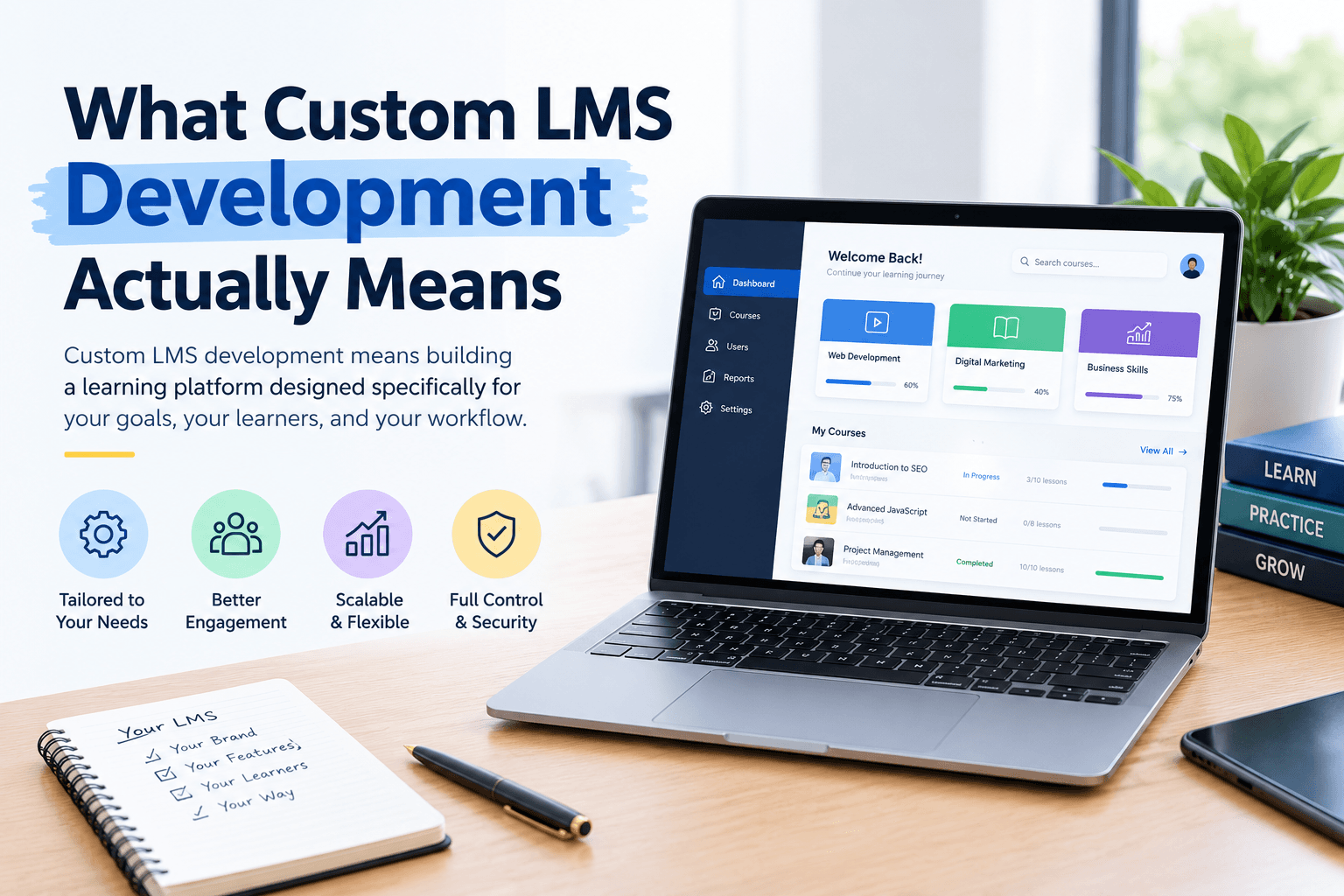
Custom LMS development is the process of building a learning management system designed around a specific organization's training workflow, compliance requirements, and existing systems, rather than adapting a generic platform to fit. For most organizations considering this route, the decision usually comes after an off the shelf system has already been tried and has fallen short in some specific, recurring way: certification tracking that doesn't match the organization's actual renewal cycles, reporting that requires manual rebuilding every time compliance needs a number, or an interface staff quietly avoid using.
This guide walks through what a custom LMS project actually involves, what shapes cost and timeline, and how to evaluate a learning management system development partner before committing to one.
Why Organizations Move Away From Generic LMS Platforms
Generic, off the shelf learning management systems are built to serve a wide range of organizations reasonably well, which usually means they serve no single organization exceptionally well. For a straightforward corporate training program with simple onboarding and general compliance modules, that trade-off is often fine. The friction shows up in organizations with more specific needs: healthcare providers with certification cycles tied to licensing boards, multi-location operations needing role-based assignment across dozens of sites, or any organization where training completion data needs to feed directly into an audit-ready compliance report on demand.
In these cases, a generic system tends to produce a familiar pattern: staff maintain workaround spreadsheets to track what the LMS itself doesn't handle well, administrators spend hours each month manually pulling reports the system should generate automatically, and completion rates stay lower than they should because the interface adds friction to something that should be simple. None of this shows up dramatically in a single week. It accumulates quietly until someone finally asks whether a custom build would actually be worth it.
The Real Scope of a Custom LMS Project
A common misconception is that custom LMS development means rebuilding everything from scratch, video playback, quiz mechanics, certificate generation, all the pieces that already work reasonably well in mature existing systems. That's rarely the smart approach. The parts of an LMS that genuinely benefit from custom development are the parts specific to how a particular organization actually operates: assignment logic tied to real roles and departments, integration with existing HR and identity systems, compliance reporting formatted the way that organization's auditors actually need it, and an interface designed around the workflows staff already have, rather than one they have to learn from scratch.
Woltrio approaches custom LMS solutions with this distinction in mind, focusing development effort on the workflow, integration, and reporting logic that's genuinely organization-specific, rather than reinventing course delivery mechanics that don't need reinventing.
Discovery: The Phase Most Projects Underinvest In
Every well-run custom LMS development project starts with a discovery phase, and it's also the phase most commonly rushed or skipped in projects that later run into trouble. Discovery isn't just gathering a features wishlist. It's mapping how training actually gets assigned, tracked, and reported today, including the workarounds staff have built because the current system doesn't handle something well.
A thorough discovery phase answers several core questions before any development starts. How does a new hire currently get onboarded, and what training gets triggered automatically versus assigned manually? What does certification renewal actually look like for different roles, and what happens today when a renewal deadline is missed? What does compliance need in a report, and in what format, when an auditor or accrediting body asks for one? What existing systems, HR platforms, identity providers, communication tools, does the LMS need to talk to, and how reliably does that need to happen?
Skipping or rushing this phase is one of the most common reasons custom LMS development projects produce a system that's technically functional but practically frustrating. The cost of getting discovery right is measured in weeks. The cost of getting it wrong is measured in months of retrofitting after launch.
Architecture: Deciding the Foundation Before the Features
Once discovery clarifies what the system actually needs to do, architecture planning decides how it will do it. This is where identity and authentication get decided, single sign-on through an existing identity provider is almost always preferable to a separate LMS-only login, since it removes friction for staff and avoids account drift over time. This is also where data architecture gets planned, deciding how the LMS will sync with HR systems so staff records don't have to be maintained twice in two places that inevitably fall out of sync with each other.
Compliance requirements belong in this phase too, not layered on afterward. Any LMS handling staff records, and in some healthcare and adjacent contexts, patient-related training content, needs to account for data protection requirements from the start: encryption at rest and in transit, role-based access controls, and detailed audit trails. Woltrio builds HIPAA, SOC 2, and GDPR requirements, where relevant, into LMS architecture during this phase specifically to avoid the expensive, risky process of retrofitting compliance into a system that wasn't designed with it in mind.
Design: Building for the Person Who Actually Uses the System
A recurring pattern in custom LMS development is designing primarily for the administrator's dashboard and treating the end learner's experience as secondary. This produces systems that report well and get used poorly. Completion rates depend heavily on how little friction staff experience logging in, finding their assigned training, and completing it without unnecessary extra steps.
Good design in this context means involving actual frontline staff in review, not just training managers and administrators, before development is far along. Woltrio's UI/UX design process treats the learner's daily experience as a primary design input specifically because low adoption undermines every other part of the system, no matter how well the backend was built.
Development and the Case for Starting Small
Full custom LMS development projects can run anywhere from a few months for a single-department build to closer to a year for an organization-wide system with deep HR and identity integration across multiple locations. Rather than committing to the full scope upfront, many organizations get more reliable results starting with MVP development: building and testing one workflow, often a single department's onboarding process or one certification tracking cycle, before expanding to the full system.
This approach surfaces integration problems, identity and HR sync issues especially, while they're still cheap and fast to fix, rather than after they've been built into a much larger system. It also gives real staff a chance to interact with the actual system early, producing feedback that shapes the full build rather than arriving as criticism after launch.
Where AI Fits Into Modern LMS Development
AI has a genuinely useful, if narrower than marketing suggests, role in learning management system development today. The most practical applications are automated reminders that adjust based on an individual's completion history rather than sending identical messages to everyone, automatic reassignment when course content gets updated so staff aren't left with outdated completed modules, and predictive flagging of staff likely to miss a certification renewal deadline before it becomes a compliance problem.
Woltrio's AI and automation services focus on these scoped, practical applications rather than a vague "AI-powered" claim without specifics behind it. The value comes from automating the manual chasing that otherwise falls on whoever runs training, not from an oversized general system layered onto a narrow, well-defined problem.
What Drives Cost and Timeline
Custom LMS development costs vary significantly based on a handful of specific factors rather than course count or feature volume alone. The number of distinct roles and departments needing different assignment logic matters more than most people expect. The depth of HR and identity system integration required is often the single largest driver of both cost and timeline, since building reliable, real-time synchronization is more involved than a one-time data import. Compliance and reporting requirements add meaningful scope when audit-ready output is genuinely complex, particularly in regulated industries like healthcare. And the number of locations or business units needing to operate somewhat independently within one system adds architectural complexity that a single-site deployment doesn't require.
Woltrio typically opens every custom LMS engagement with a discovery phase specifically so these cost drivers get identified and scoped honestly before development begins, rather than surfacing as budget surprises partway through the project.
Choosing an LMS Development Company
Evaluating an LMS development company comes down to a handful of specific questions rather than a general impression from a sales conversation. Ask specifically how the vendor approaches identity and HR integration, not just whether integration is possible in theory. Ask what compliance reporting actually looks like in practice, and ask to see a sample rather than a description. Ask whether the vendor is willing to start with a pilot or MVP on one workflow before committing to a full build, since resistance to this is often a sign of optimizing for a bigger sale rather than a better outcome for the client.
A vendor that treats discovery as a genuine scoping exercise, rather than a formality before jumping straight to development, tends to produce systems that hold up well after launch. One that pushes toward building everything custom regardless of actual need, including course delivery mechanics that don't need reinventing, is often optimizing project size rather than the client's actual outcome.
Bringing It Together
Custom LMS development succeeds when it treats the specific parts of an organization's training workflow, assignment logic, integration needs, and compliance reporting, as the genuine focus of custom engineering, while relying on proven approaches for the parts that don't need reinventing. Discovery and architecture decisions made early tend to determine whether the finished system becomes something staff use smoothly every week or something they quietly work around. Organizations considering a custom build are usually better served starting with a focused pilot on one real workflow than committing to a full organization-wide system on day one.
Quick Answers
Custom LMS development is most valuable when applied to workflow, integration, and reporting logic specific to an organization, not to reinventing course delivery mechanics.
Discovery and architecture decisions made early in the project determine most of whether the finished system succeeds or requires costly retrofitting later.
HR and identity integration is typically the single largest driver of both cost and timeline in a custom LMS project.
Starting with an MVP on one workflow surfaces integration problems while they're still cheap to fix, rather than after a full build.
Compliance requirements, including HIPAA, SOC 2, and GDPR where relevant, should be designed into the architecture from the start, not added after development.
Next Step
A discovery conversation through the Woltrio homepage is the starting point for scoping a custom LMS project around an organization's actual training workflow.