

























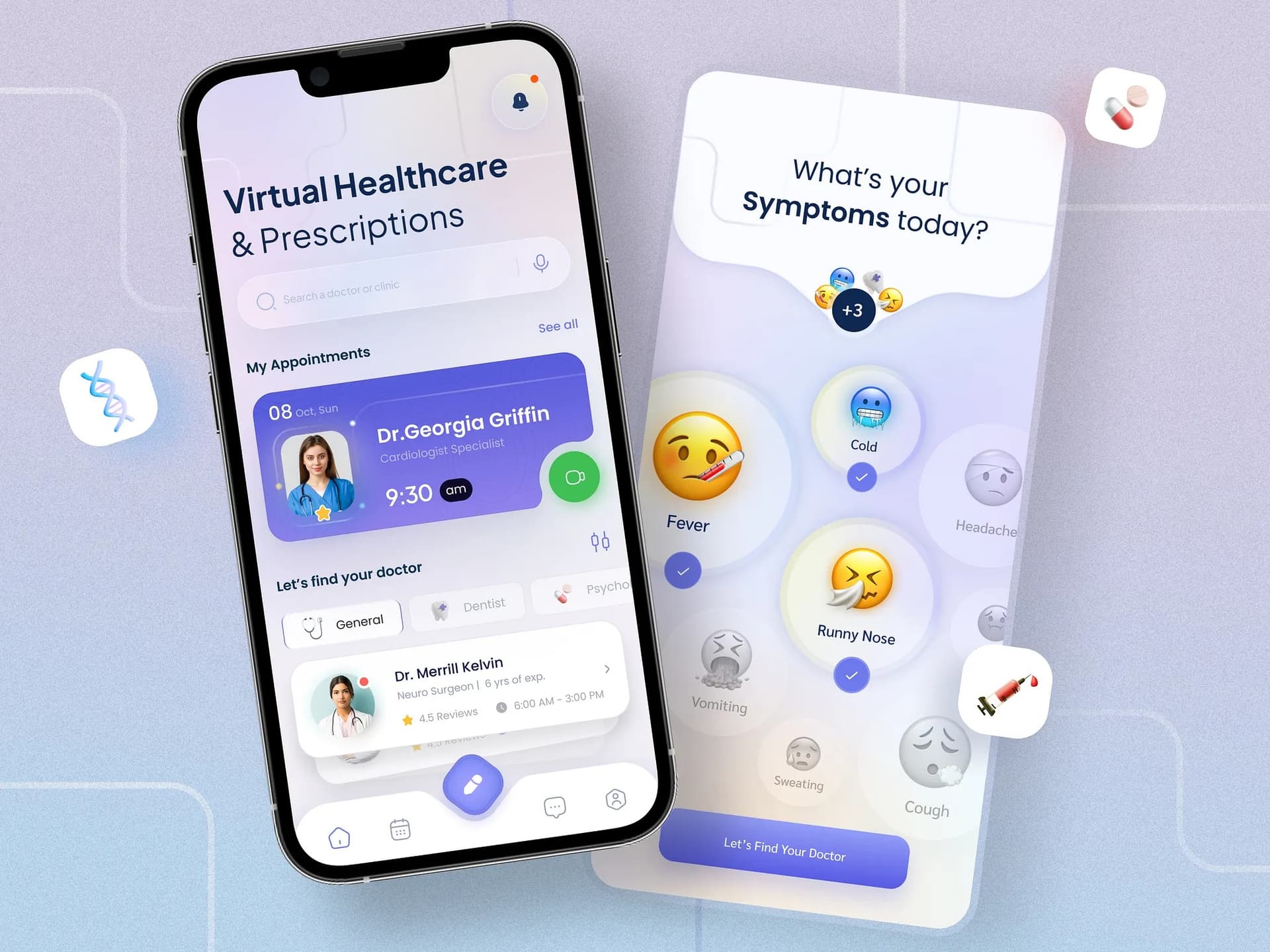
Telemedicine apps have become a core part of modern healthcare. They help clinics, hospitals, and solo practitioners offer virtual consultations, reduce patient wait times, and improve access to care. But before building one, the biggest question most businesses ask is simple: how much does telemedicine app development cost?
The short answer is that the cost can range from $20,000 to $150,000+, depending on features, platform choice, integrations, compliance requirements, and the complexity of the product. A basic MVP costs far less than a full-scale telehealth platform with video calling, EHR integration, admin dashboards, and security compliance.
What Affects Telemedicine App Development Cost?
The cost of a telemedicine app is not fixed because every project has different goals. A simple doctor appointment app will cost much less than a multi-role healthcare platform with real-time video, prescriptions, payments, and patient records.
The main factors that affect cost include:
App complexity.
Number of features.
Supported platforms.
UI/UX design quality.
Third-party integrations.
Security and compliance.
Development team location.
Testing and maintenance.
Each of these items adds time, technical effort, and budget to the final product.
Telemedicine App Cost by Type
Different types of telemedicine apps come with different budgets. If you are building a small MVP, you can keep costs lower by focusing only on essential features. If you want a full-featured healthcare platform, the budget rises quickly.
App Type Estimated Cost Range Basic MVP telemedicine app $20,000 – $50,000 Mid-level telehealth app $40,000 – $100,000 Advanced telemedicine platform$100,000 – $150,000+
A basic version usually includes user login, profiles, appointment booking, and video consultations. Advanced apps add prescription management, chat, EHR integration, analytics, and role-based dashboards.
Key Features That Increase Cost
The more features you add, the more the cost goes up. Some features are simple to build, while others require complex backend systems and extra security.
1. User Registration and Profiles
Patients, doctors, and admins need separate profiles. This feature is necessary, but it becomes more expensive when role-based access and verification workflows are added.
2. Appointment Scheduling
Scheduling is one of the most common features in telemedicine apps. It becomes more advanced when you allow recurring visits, calendar sync, cancellations, reminders, and doctor availability management.
3. Video Consultation
Live video calls are one of the most valuable telemedicine features. They also add cost because they require real-time communication technology, stable performance, and strong data protection.
4. In-App Chat and Messaging
Messaging helps patients ask questions before or after consultation. Adding secure text chat, file sharing, and attachments increases development complexity.
5. Electronic Health Record Integration
EHR integration is a major cost driver because it requires secure data exchange with external healthcare systems. This feature is especially important for clinics and hospitals that want a connected workflow.
6. Payments and Billing
Online payments, invoices, subscriptions, and insurance-related workflows add more engineering work. Payment gateways also need extra security and testing.
7. Notifications and Reminders
Push notifications, SMS alerts, and email reminders improve user engagement. While this feature sounds simple, it still requires backend logic and third-party API integration.
8. Admin Dashboard
A good admin panel helps manage users, appointments, reports, and system activity. For larger platforms, this becomes a powerful control center and increases total development effort.
Cost Breakdown by Development Stage
Telemedicine app development usually happens in stages. Each stage has its own cost, and skipping any of them can create problems later.
Development Stage Typical Cost Share Discovery and planning 5% – 10% UI/UX design 10% – 15% Frontend development 20% – 25% Backend development 25% – 30% Integrations 10% – 15% Testing and QA 10% – 15% Deployment and launch 5% – 10%
Planning and discovery help define app features, user roles, compliance needs, and technical scope. Testing is especially important in healthcare apps because even small bugs can affect trust and usability.
Hidden Costs You Should Not Ignore
Many companies focus only on the build cost and forget the ongoing expenses. These hidden costs can affect the actual investment significantly.
Some common hidden costs include:
Maintenance and bug fixes.
Cloud hosting.
Security updates.
Compliance audits.
API subscription fees.
Customer support.
Future feature upgrades.
These costs are ongoing, which means your app budget should include post-launch support, not just initial development.
Compliance and Security Costs
Telemedicine apps handle sensitive medical data, so security is not optional. If your app stores patient data or supports virtual consultations, it must follow strict privacy and security standards.
Security-related costs may include:
Data encryption.
Secure authentication.
Access control.
Audit logs.
HIPAA-style compliance measures.
Regular security testing.
The more sensitive the data and the more markets you serve, the higher these compliance costs become.
How to Reduce Telemedicine App Development Cost
You do not need to build everything at once. The smartest way to control budget is to start small and scale later.
Here are a few ways to reduce cost:
Launch an MVP first.
Start with one platform instead of both.
Use pre-built APIs where possible.
Prioritize must-have features only.
Keep the design clean and simple.
Outsource development to an experienced team.
Plan for future upgrades instead of overbuilding early.
This approach helps you validate the product before investing in advanced functionality.
Estimated Timeline for Development
Cost is also linked to time. A more complex app usually takes longer to build, which increases the total budget.
Basic MVP: 3 to 5 months.
Mid-level app: 5 to 8 months.
Advanced platform: 8 to 12 months or more.
If you need custom integrations, stronger compliance, or multiple app versions, the timeline can stretch further.
Is Building a Telemedicine App Worth It?
Yes, if your goal is to improve access to care, reduce operational friction, and create a scalable digital healthcare product. Telemedicine continues to grow because patients value convenience and providers want more efficient workflows.
A well-built app can support consultations, boost patient retention, and open new revenue streams. The key is to balance features, compliance, and budget from the start.
FAQs
How much does it cost to build a telemedicine app?
A telemedicine app can cost anywhere from $40,000 to $300,000+ depending on features, platform, compliance, and complexity.
What is the cheapest way to build a telemedicine app?
The cheapest way is to build an MVP with only core features like login, booking, and video consultation.
Why are telemedicine apps expensive?
They handle sensitive medical data, require secure video communication, and often need third-party integrations and compliance measures.
How long does telemedicine app development take?
A simple app may take 3 to 5 months, while a large healthcare platform can take 8 to 12 months or more.
Conclusion
Telemedicine app development cost depends on what you build, how fast you build it, and how advanced the final product needs to be. If you start with an MVP and add features gradually, you can control costs while still creating a valuable healthcare product.
For businesses entering digital healthcare, the smartest move is to focus on the right features, strong security, and a clear roadmap. That way, your app is not just affordable to build, it is also built to grow.